InRealArt facing the digital giants: anatomy of a hybrid model in the landscape of French online galleries
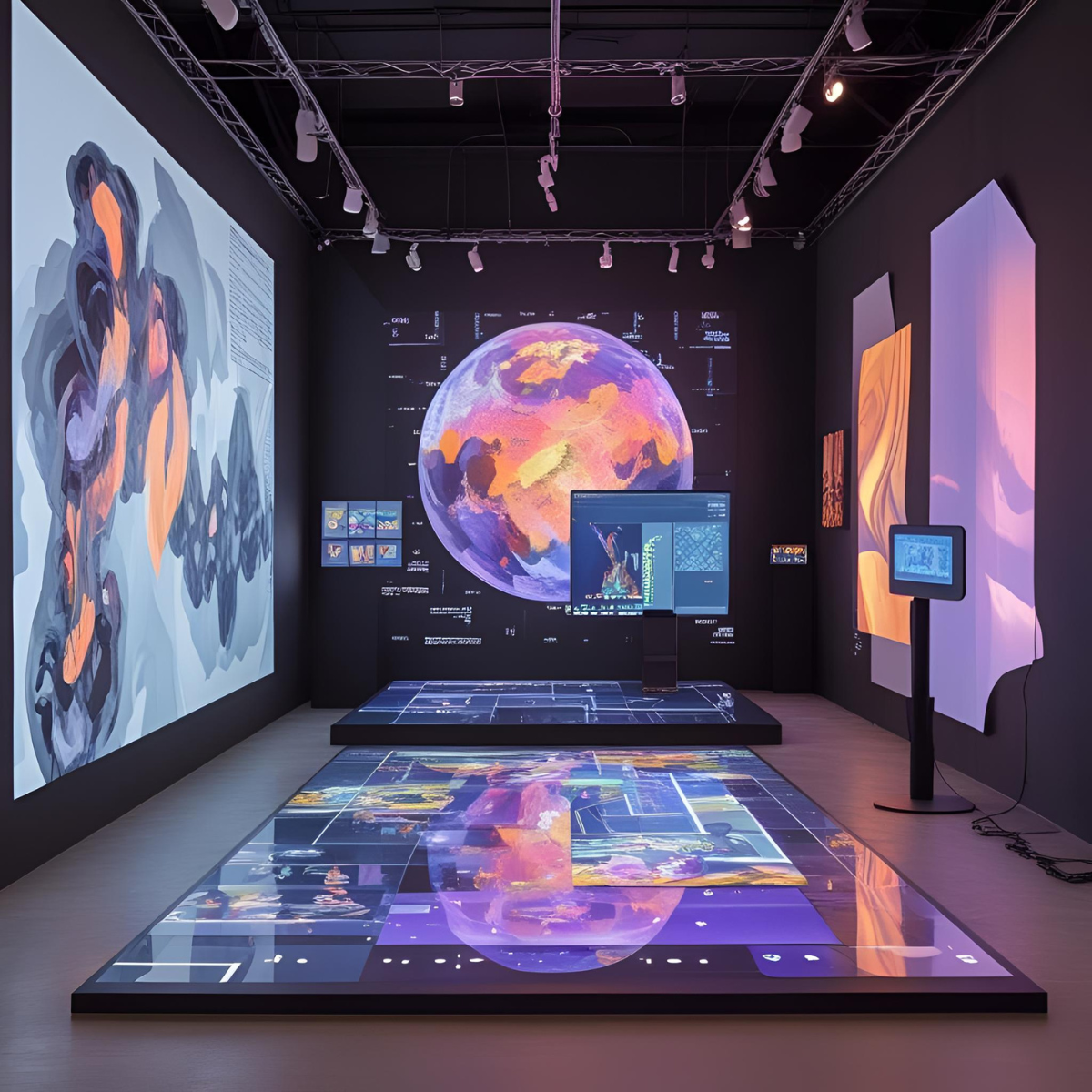
The online art market, which represented 15.9% of overall sales in 2023 (Hiscox Report 2023), is establishing itself as an essential channel.
Economic models: the InRealArt disruption
1. The commission, a structuring debate
Artmajeur, Balthasart or Saatchi Art charge between 30% and 40% per sale, depending on their policy.
InRealArt opts for 50%, a rate aligned with physical galleries, but includes a free "Com Pack": e-commerce site, content production, relay on newsletters and social networks, and access to events such as the Salon d'Automne.
2. Logistics and transparency
If Rise Art or Singulart handle shipping, InRealArt leaves the storage and packaging to the artist – a weakness compared to the giants.
Visibility: the art of breaking through digital noise
1. The curatorial approach
Unlike Artmajeur (2.5 million works) or Saatchi Art (1.4 million), InRealArt relies on a demanding selection: only 15 “rated” artists and 180 referenced works.
2. Phygital, the keystone
When Artsper or Artnet remain 100% digital, InRealArt relies on physical partnerships with Galerie Leadouze (16 avenue Matignon) and Art Thema.
3. Marketing: storytelling vs algorithms
Where Singulart uses recommendation algorithms, InRealArt favors editorial storytelling: interviews, focus, and calendar campaigns (e.g.: Salon d'Automne 2024 with QR code to the catalog).
Accessibility: what model for emerging countries?
Balthasart (average basket: €300) and Artmajeur (works from €50) explicitly target young talents.
InRealArt requires 1 to 3 donated canvases per year to cover marketing costs, reserving its model for artists capable of producing a minimal volume.
Limits and perspectives
1. Rayonnement international
With 1 million visitors/month, Artmajeur is well ahead of InRealArt, whose reach remains centered on France.
2. Technological innovation
Rise Art, a pioneer in the rental of works, or Matchi Art (“Tinder of art” according to TheArtLight), show that InRealArt could enrich its model with interactive tools.
Conclusion: a third way?
InRealArt embodies a bold hybridization: high commission rate versus premium services, rigorous curation versus massification, and physical anchoring in a dematerialized market.
“We don’t expose you. We reveal you” – Timothée Roy, CEO of InRealArt.