Musical chairs at the head of American museums: what an unprecedented wave of departures reveals
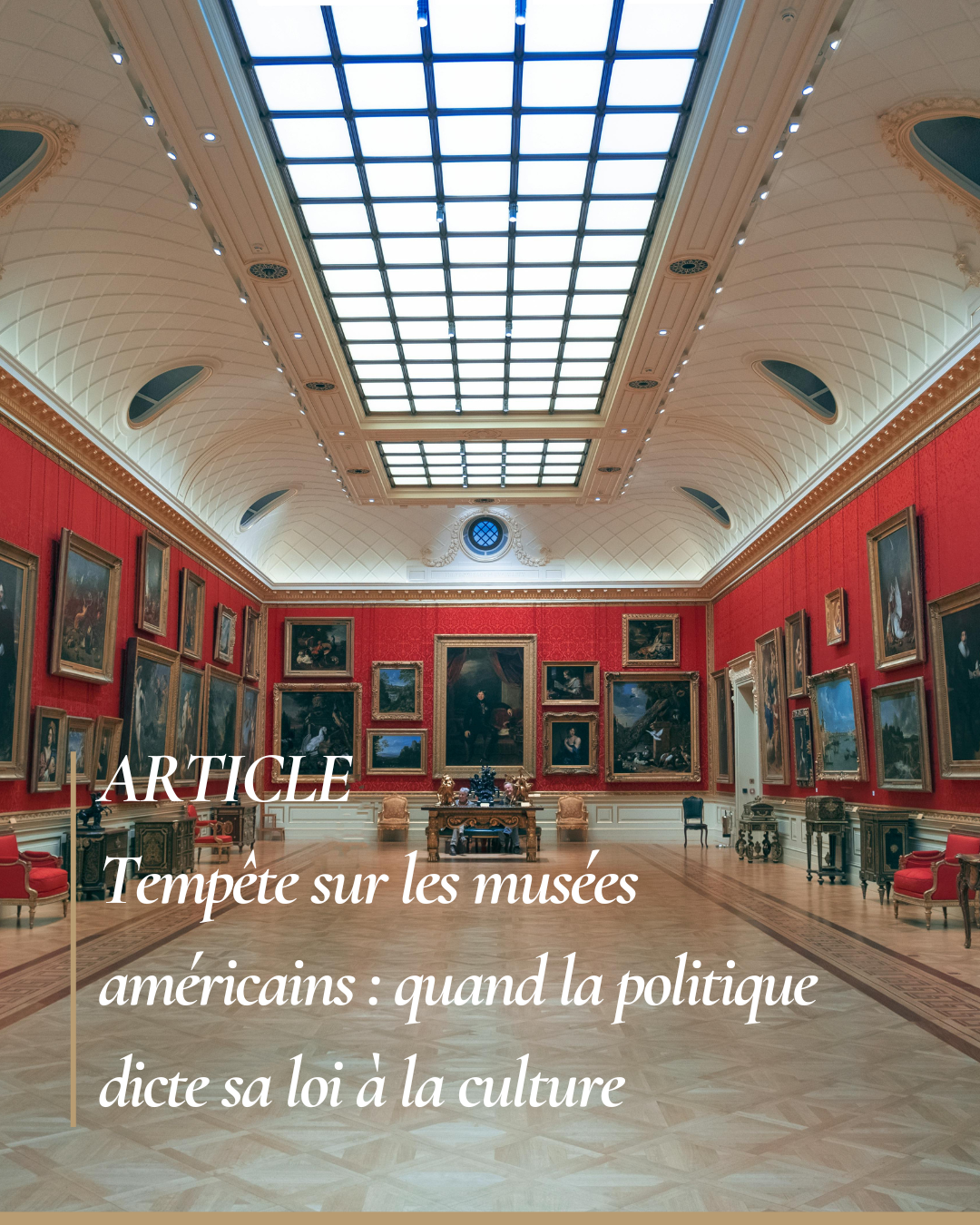
Between retirements after several decades and unprecedented political pressure from the White House, American museums are experiencing a pivotal period of transition at their head.
Never before have so many major American museums changed direction in such a short time.
A cascading wave of departures
The strongest symbol of this movement remains the departure of Glenn Lowry from MoMA, in September 2025, after three decades at the head of the New York institution.
This handover is part of a much broader movement.
Common to all these transitions: the preference given to internal candidates, already familiar with the institution, rather than external profiles.
Positions still to be filled
- Le Dallas Museum of Art recherche toujours un nouveau directeur
- Le Modern Art Museum of Fort Worth est également en pleine recherche
- Le Museum of Fine Arts de Boston a lancé sa propre procédure de sélection
When the White House gets involved in the governance of museums
Added to this generational renewal is a dynamic of a totally different nature, and much more worrying for the independence of American cultural institutions.
Founded in 1846, the Smithsonian Institution oversees no fewer than twenty-one museums, galleries and federal libraries in Washington, which welcomed nearly 17 million visitors in 2024. Its governance structure makes it particularly vulnerable: its board of directors includes members of Congress as well as the Vice President of the United States, J.D. Vance, charged by decree with “removing any inappropriate ideology” from exhibitions.
The concrete consequences were not long in coming.
Steering departures under direct pressure
It is in this context that several leaders left their positions under pressure from the administration.
The standoff further intensified at the end of 2025 and the beginning of 2026. On December 18, two senior administration officials sent a letter to the Smithsonian demanding the complete submission of internal documentation before January 13, 2026, under penalty of withdrawal of funding, in accordance with the presidential decree.
Two logics, the same institutional fragility
These two waves of changes, although very different in nature, converge on one point: they remind us of the extent to which the governance of American museums, historically based on private philanthropy and independent boards of directors, remains sensitive to power struggles, whether internal to the art world or imposed from outside.
For sector observers, the issue now goes beyond the simple question of people.