Grim, the Valorant phenomenon: portrait of the influencer who speaks to the new generation of collectors
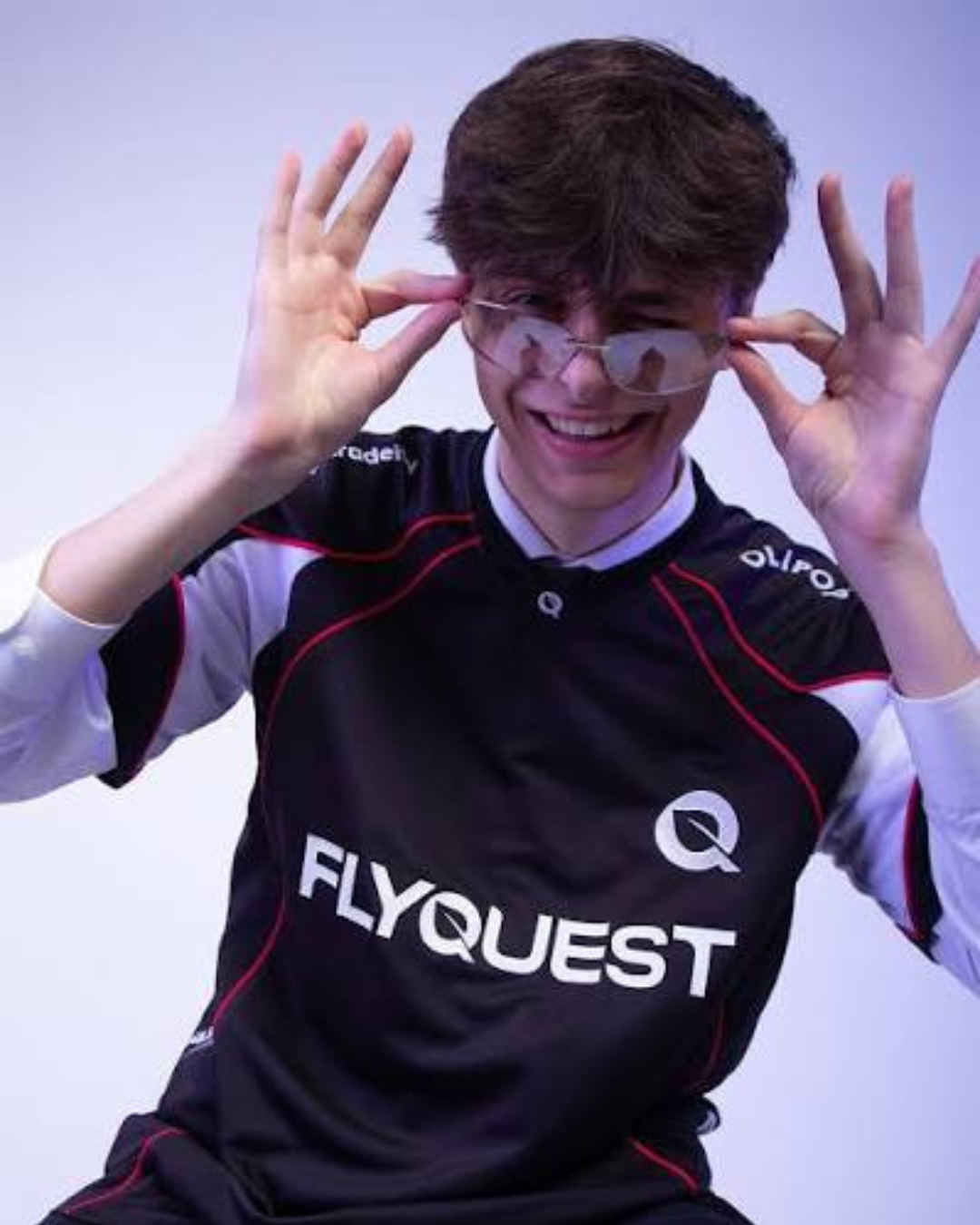
We told you: a collaboration is being prepared. Before lifting the veil, we present to you the international phenomenon that is Grim, and what it reveals about a generation of collectors in the process of being formed, with its own codes and its own idols.
Who is Grim? Portrait of a video game native
Grim is an American content creator and streamer who has established himself, in just a few years, as one of the essential voices in Valorant, the competitive shooter from Riot Games. Born in the early 2000s, he rightfully belongs to generation Z: the one who has never known a world without screens, without high-speed internet, without the possibility of broadcasting his passion live to thousands of strangers who have become, over the hours of streaming, a real community. Where previous generations discovered video games as a leisure activity, theirs sees it as a language, a place of sociability and, increasingly, a profession.
His rise follows that of an era. Grim doesn't come from traditional eSports circuits or major professional gaming academies. He made himself known through the most contemporary avenue possible: that of the viral clip, the short video shared, commented on, imitated. His trajectory is that of a live autodidact, who understood before many that attention, on the internet, is not decreed but earned, image after image, punchline after punchline, moment of grace after moment of grace.
What is striking about him is this rare combination: a level of play that commands the respect of connoisseurs, and a sense of spectacle that speaks well beyond the circle of initiates. You can know nothing about Valorant and still be amazed by one of its actions. It is precisely this ability to make expertise readable, desirable, almost artistic, which makes him much more than a successful player: a creator in the full sense of the term.
The “Sage hand”: a signature before its time
In Valorant, each player chooses an “agent”, a character with specific abilities. Most creators juggle several. Grim, for his part, made a choice that would become his trademark: Sage, the support agent capable of erecting walls of ice to block, protect or open passages. Where others saw a defensive, almost secondary character, Grim saw an infinite field of expression. He made it into an art.
His famous “Sage walls”, placed in improbable places, exploited with an inventiveness that no one had dared before him, became his signature. It is this signature that has propelled him: his videos of impossible walls, spectacular rescues and acrobatic shots have accumulated millions of views, one of the most famous alone exceeding 2.5 million views. By specializing to the extreme, by pushing a single idea to the point of virtuosity, Grim has done exactly what great artists do: transforming a constraint into a recognizable style among thousands. An art collector will immediately understand this logic, because a signature, whether pictorial or video game, is precisely what makes a work identifiable, rare and desirable.
Valorant, the playground of a global generation
To understand the scale of the Grim phenomenon, we must understand the territory in which it operates. Valorant, launched by Riot Games in 2020, has established itself in record time as one of the most played and most watched competitive games on the planet. Its ecosystem combines a leading professional esports scene (whose international finals bring together millions of simultaneous spectators) and a huge community of creators who bring the game to life on a daily basis, between two official competitions.
What sets Valorant apart is its visual identity: crafted characters, a colorful and stylized universe, an artistic direction designed to be immediately recognizable and highly “shareable”. The game was made in the age of social media, for the age of social media. Every agent, every card, every weapon skin is a potential object of desire. In this environment conceived as an aesthetic work as much as a sport, a creator with an assertive style like Grim does not just occupy the space: he becomes one of its authors.
Valorant, above all, is global by construction. Servers, competitions and communities span from North America to Asia, from Europe to Brazil. A creator who breaks through in this universe never shines in a single country: he instantly reaches an international, cross-border audience, united by the same passion and the same language. This is what makes Grim an “international phenomenon” in the strict sense: not an exported local celebrity, but a global figure from the outset.
Anatomy of a phenomenon: Twitch, YouTube, TikTok, the conquest of all scenes
Grim's strength also lies in its presence on all digital fronts at the same time. On Twitch, the premier platform for live streaming, he brings together a loyal community that follows him in real time, shares his laughs and his exploits, and keeps his chat alive as a permanent place of sociability. On YouTube, where he has more than a million subscribers, he capitalizes his best moments into videos that continue to play, convert new fans and feed the algorithm long after the live broadcast. On TikTok, his most spectacular extracts reach an even wider audience, often without knowing the game, accumulating millions of likes.
This multi-platform presence is not a detail: it is the key to understanding the new celebrity. A creator like Grim doesn't exist on a single channel, with a single audience, but as an ecosystem of its own, a continuous flow of attention that flows from live to video, from short-form video, from short-form to social. Each platform feeds the others. Together, they make up a cumulative audience that numbers in the millions and, above all, which is characterized by a level of engagement that many traditional media would envy.
Because the raw number of subscribers does not tell everything. What sets streaming stardom apart is the depth of the connection. Grim's audience does not "consume" passively: it participates, reacts, relays, defends, celebrates. He knows the rituals, the recurring jokes, the cult moments. This intimacy (a creator speaking live, for hours, to a community who feels like they know him personally) creates a relationship of trust without parallel in the history of media. And trust, as we will see, is precisely the raw material of any art market.
The creator economy: when streamers become cultural institutions
Grim's journey is part of a larger revolution, often referred to as the “creator economy”. In a decade, a new category of cultural actors has emerged: individuals who, without a studio, without a television channel, without a record label or gallery, have built audiences and brands surpassing those of many established media outlets. The streamer is no longer an amateur who films his passion; he is a cultural entrepreneur, surrounded by agents, partners and brands, at the head of a real content company.
This shift has a major consequence: the power of prescription has shifted. Yesterday, a brand that wanted to reach young people bought advertising space on television or signed a muse from cinema or music. Today, she is turning to creators, because they are the ones who have the attention and, even rarer, the credibility with new generations. Partnerships between brands and streamers are no longer a marketing gimmick: they have become a pillar of the strategy of the biggest players in tech, gaming equipment or luxury.
Hardware manufacturers understood this among the first. Hardware leaders (keyboards, mice, headsets) equip, support and co-create with creators, knowing that an admired player is worth a thousand ads. InRealArt knows this movement from the inside: this is precisely the logic that underlies its work alongside Logitech, a world reference in the sector. What these brands have understood about technology, the art world is only just beginning to glimpse: creators are not only audience relayers, they are taste makers.
A generation, its codes, its rites, its idols
To present Grim is ultimately to present a generation. This one is unlike any other in its relationship to culture. She grew up in the abundance of images and content, and in response developed an extremely fine radar for distinguishing the authentic from the fabricated. She is wary of direct advertising discourse, but deeply adheres to those in whom she recognizes sincerity, passion and real expertise. She does not follow distant and inaccessible celebrities: she follows figures with whom she feels she has a direct link.
This generation has its own codes, often illegible to the uninitiated: vocabulary, references, memes, community rituals. It has its own places (Twitch, Discord, TikTok) which function as public places where reputations are built and values are transmitted. And she has her own idols, of which Grim is an emblematic example: creators who owe their status neither to a heritage nor to an institution, but to the sole recognition of their community.
Streamers, new taste prescribers
This point is decisive for anyone interested in the future of culture and the art market. The prescribers of taste for this generation are no longer critics, institutions or magazines: they are the creators they admire. When a figure like Grim is enthusiastic about an object, a visual universe or a work, it is not a recommendation among others: it is a validation which engages his credibility, and which his community receives with rare attention and confidence.
The mechanism is the same as that which has always structured the art world, simply transposed into a new ecosystem. Throughout history, taste has been spread by figures of authority and desire: patrons, enlightened collectors, visionary merchants. Today, a growing part of this authority is played out on screen, live, in front of communities of several million people. To ignore this shift would be, for the art world, to cut itself off from the generation that will make the market of tomorrow.
The young generation of collectors is now being formed
Here we touch the heart of the conviction that drives InRealArt. The art market, long stuck to its codes and closed circles, is facing a major generational challenge: its collectors are getting older, and the next generation will not come spontaneously from the same networks as yesterday. The new generation of collectors will not be born in cozy auction rooms; it is already being formed, elsewhere, in the digital universes where passions, communities and desires are built today.
But this generation is not starting from scratch. Contrary to popular belief, she is not indifferent to the notion of collecting: she already collects, intensely, but differently. She grew up in worlds where owning a rare, unique object, a marker of belonging and status, is obvious. What she lacks is not the collector's instinct: it is the bridge between this instinct, which she exercises in the game, and the world of art, which she still perceives as distant. Building this bridge is exactly the mission that InRealArt has given itself. And to fulfill it, we must speak the language of this generation, be present where it is, and associate with the figures it respects. Grim is one of them.
They already collect: skins, drops and digital items
You just need to observe the uses to be convinced. In Valorant, as in most major contemporary games, players buy, exchange and display “skins”, weapon or character skins, often published in limited series, some of which reach high prices. These objects provide no competitive advantage: we acquire them for their beauty, their rarity, the status they confer and the pleasure of possessing them. It is, exactly, the psychology of the collector, exercised on digital objects.
Added to this are “drops” (these objects distributed in limited quantities during events) and a whole culture of limited editions, numbered items, exclusive items, which this generation has mastered perfectly. She intuitively understands notions that the art world has taken centuries to formalize: provenance, authenticity, rarity, signature value. All that is missing is a trigger for this instinct, today turned towards the objects of the game, to open up to the true work of art: physical, signed, full of history. This trigger will not come from an institutional discourse: it will come from trusted figures who will make the connection. Once again, Grim.
From screen to object: why physical art complements the digital collector
A question remains: if this generation already collects digital objects, why direct it towards physical and authentic art? The answer lies in what digital technology, despite all its richness, cannot offer. A skin, however rare it may be, remains locked in the game that saw it born; its value depends entirely on the survival of its platform. The true work of art exists in the real world, is transmitted, crosses fashions and technologies, and carries within itself a history that nothing can erase. Where the digital object is infinitely reproducible in its form, the signed work is irreducibly unique. For a collector who cut his teeth in the virtual world, discovering physical art means crossing a threshold: moving from ephemeral possession to lasting possession, from status displayed online to inheritance transmitted over time.
This passage is not a break, it is a natural extension. The reflexes acquired in the world of gaming (recognizing a signature, valuing rarity, verifying provenance, desiring the exclusive) are exactly those of the art collector. InRealArt is precisely betting that these reflexes, once awakened to true art, will find there an accomplishment that digital technology alone cannot provide. Traceability and the guarantee of authenticity, at the heart of InRealArt's approach, immediately speak to a generation accustomed to verifying the origin and edition of what it owns. What the art world calls provenance, this generation already practices without knowing it.
This is where the role of a creator like Grim becomes irreplaceable. No institutional campaign will convince this generation to cross this threshold: only a trusted figure, from their own world, can credibly show them the way. When a creator she admires (whose real talent and proven authenticity she knows) appropriates the world of art and makes it an object of desire, he performs a translation that no one else can perform. It is not a question of placing art on esports, nor the reverse, but of revealing their deep kinship to those who, tomorrow, will be its heirs.
Why Grim, why now: the bridge between esports and art
The choice of Grim is therefore neither anecdotal nor opportunistic. It arises from a precise reading of the period. Grim brings together, in a single figure, everything the art world needs to engage with the rising generation: a massive international audience, a deep bond of trust with his community, credibility earned by talent and not by marketing, and, this is essential, a true creator's sensitivity. Because Grim, in his own way, is an artist: he composes, he stylizes, he signs. He knows what it means to turn a constraint into a work, and a gesture into a trademark.
At a time when artificial intelligence produces infinite images and authenticity becomes the rarest commodity, associating a platform dedicated to true artists with a creator whose entire value is based on authenticity and real talent is strategically obvious. Grim not only represents an audience to be conquered: he embodies the very values that InRealArt defends: singularity, signature, authentic emotion, opposed to the uniformity of mass-generated content.
Finally, there is a question of timing. The generation of collectors of tomorrow is being formed now, at this precise moment, before their habits become fixed. Waiting for her to age and “naturally” turn to art would be a lost bet: her codes are being constructed today, in the worlds she inhabits. Going to meet him requires being there early, with the right partners. This is the meaning of this rapprochement: to sow, from now on, in the most fertile ground there is.
What this meeting announces
Presenting Grim was therefore much more than portraying a successful streamer. It was to sketch the face of a generation, to describe its places, its codes and its idols, and to show why the art world can no longer afford to ignore it. Grim is the point where all these dynamics converge: the creator economy, the culture of digital collecting, the quest for authenticity in the age of AI, and the emergence of a new generation of enthusiasts ready to become the generation of collectors of tomorrow.
The veil is not yet completely lifted on this collaboration. But you now know the protagonist, and you understand why he was chosen. The meeting between Grim and InRealArt is not the simple addition of an audience and a brand: it is the meeting of two worlds which, despite distant appearances, share the same obsession: the value of the authentic gesture, the power of the signature, and the desire to possess what is rare and true. More, very soon.
Note and sources
The biographical and numerical elements relating to Grim come from his official accounts (Twitch, YouTube, X/Twitter, Instagram) and public databases dedicated to creators.